

A tooth infection does not necessarily remain confined to the area where the pain started. When bacteria reach the pulp inside a tooth, inflammation or infection can develop within the root canal system. Without appropriate treatment, the infection can extend beyond the tooth and affect the surrounding tissues.
For someone considering root canal treatment in Anna Nagar, the important question is not simply whether the procedure can relieve pain. It is whether treating the infected tooth can help preserve the natural tooth and prevent the condition from becoming more complicated.
How Does a Tooth Become Infected?
Deep dental decay is one of the common ways bacteria reach the pulp. A crack, traumatic injury or repeated dental procedures can also compromise the inner structure of a tooth.
Initially, you may notice sensitivity to cold, heat or sweets. As inflammation progresses, symptoms can include spontaneous toothache, pain while chewing, lingering sensitivity or tenderness around the tooth.
However, symptoms vary considerably. Some teeth with significant infection may cause little or no pain.
That is why waiting for severe symptoms is not a reliable way to determine whether a tooth needs treatment.
What Can Happen If a Tooth Infection Is Ignored?
The Infection May Progress
The pulp has limited ability to recover once it becomes irreversibly inflamed or infected. Without appropriate treatment, bacteria can move through the root canal system toward the tissues surrounding the root.
An Abscess Can Develop
An infection may eventually form an abscess, which can cause swelling, tenderness, a bad taste or a swelling on the gum.
If swelling spreads into the face or is accompanied by fever or difficulty swallowing or breathing, urgent medical attention is required.
The Tooth Can Become Structurally Weaker
Extensive decay can destroy a substantial amount of tooth structure. Even after the infection is treated, the remaining tooth may require a protective restoration depending on its condition.
Extraction May Become Necessary
A severely damaged or fractured tooth may not be predictably restorable. In such situations, extraction may become necessary.
When a natural tooth can be predictably treated and restored, preserving it is generally an important consideration in restorative dentistry.
What Does Root Canal Treatment Actually Do?
Root canal treatment removes inflamed or infected pulp from inside the tooth.
The dentist creates access to the internal canal system, cleans and shapes the canals, and seals them to reduce the risk of reinfection. The tooth is subsequently restored based on how much healthy structure remains and how much functional load it will receive.
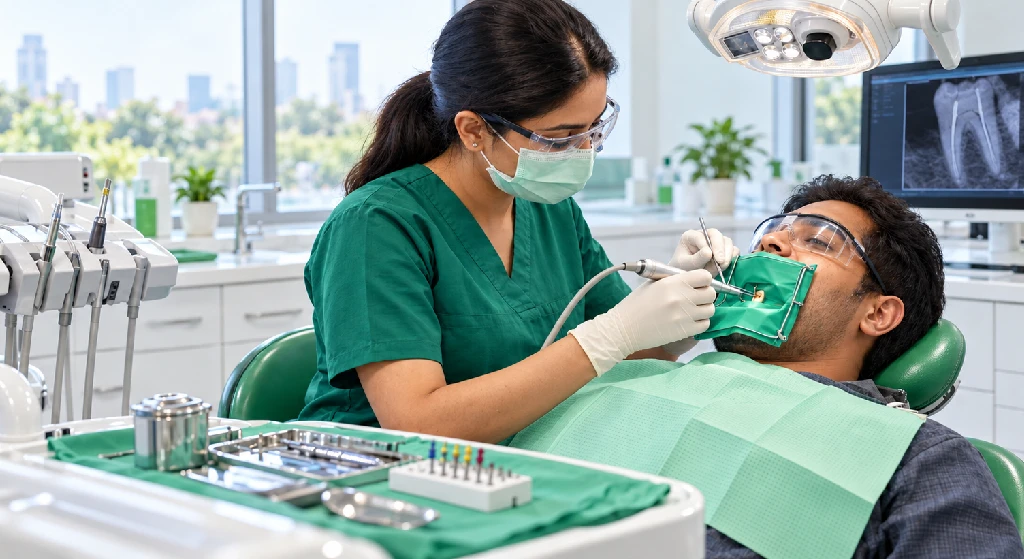
At Thooya Oral Wellness, root canal therapy focuses on infection control and natural-tooth preservation. The clinic also uses rubber dam dentistry during endodontic procedures to create an isolated and controlled treatment environment.
Does Every Toothache Require Root Canal Treatment?
No.
Tooth pain can result from cavities, cracked teeth, gum disease, exposed dentin, traumatic injuries, impacted teeth and other conditions.
This is why a dentist should establish a diagnosis before recommending treatment.
At a dental clinic in Anna Nagar, an examination may include clinical assessment and appropriate imaging to understand the condition of the tooth, its roots and surrounding structures.
Thooya Oral Wellness uses digital diagnostics and imaging as part of its approach to treatment planning, particularly when more detailed assessment is required.
Can Antibiotics Replace Root Canal Treatment?
Antibiotics may be prescribed in specific situations, particularly when there are signs of spreading infection or systemic involvement. However, antibiotics do not remove infected tissue from inside a tooth.
When the source of infection is the root canal system, definitive dental treatment may still be necessary.
The appropriate approach depends on the clinical findings and should be determined by a dentist.
When Should You Seek Root Canal Treatment?
Consider booking a dental examination if you have:
- Persistent toothache
- Pain while chewing
- Lingering sensitivity
- Swelling near a tooth
- A recurring gum boil
- A tooth that has darkened following trauma
- Severe pain that suddenly disappears
A reduction in pain should not automatically be interpreted as recovery.
If you are searching for root canal treatment in Anna Nagar, early assessment can help determine whether the tooth can be treated conservatively, requires endodontic treatment, or needs another restorative approach.
Preserving the Natural Tooth
The objective of modern endodontic treatment is not simply to stop pain. It is to control infection and preserve the natural tooth whenever the tooth remains structurally and clinically suitable.
Thooya Oral Wellness follows a preventive-first philosophy and provides specialist-led dental care in Anna Nagar, Chennai, with treatment planning based on individual oral health needs.
Frequently Asked Questions
1. Can a tooth infection go away without treatment?
An infection inside a tooth generally requires dental treatment. Symptoms may temporarily reduce while the underlying infection remains.
2. What happens if I delay root canal treatment?
The infection may progress into the surrounding tissues and potentially result in an abscess, further structural damage or eventual tooth loss.
3. Is root canal treatment painful?
Local anaesthesia is used to control discomfort during treatment. Some tenderness can occur afterward, particularly when the tooth and surrounding tissues were already inflamed.
4. Can antibiotics cure a tooth infection?
Antibiotics can be appropriate in certain cases but do not remove infected pulp from inside a tooth. Definitive dental treatment may still be necessary.
5. Does every infected tooth need to be extracted?
No. If sufficient healthy tooth structure remains and the tooth can be predictably treated and restored, root canal treatment may allow it to be preserved.
6. Where can I get root canal treatment in Anna Nagar?
Thooya Oral Wellness provides root canal and endodontic care at its clinic in Y Block, Anna Nagar, Chennai. A consultation can determine the cause of infection and the appropriate treatment approach.