


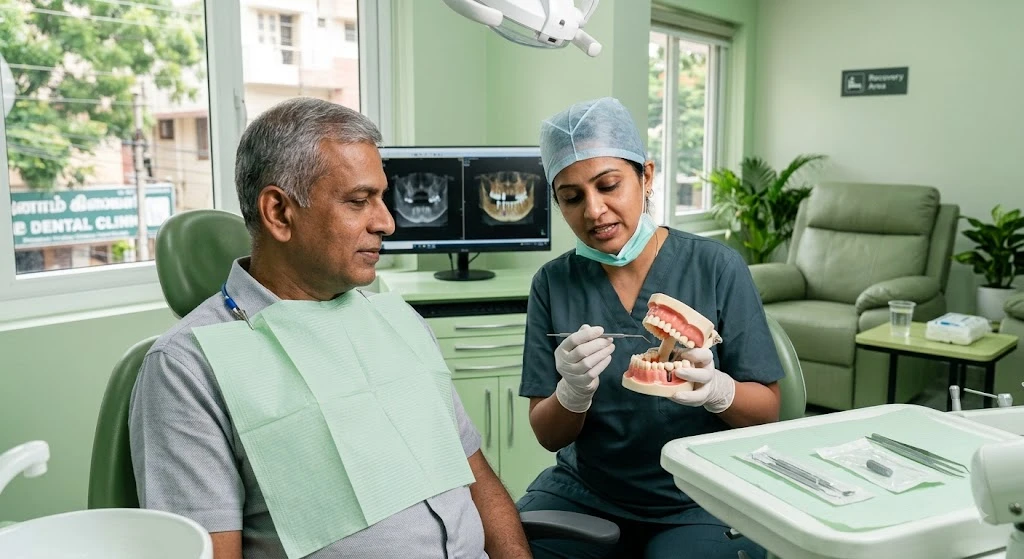
A missing tooth can affect more than your smile. It may make chewing difficult, affect speech, and contribute to changes in the way surrounding teeth function. Dental implants in Chennai offer a long-term tooth replacement option designed to restore both appearance and oral function.
Dental implants are artificial tooth roots that support a replacement tooth or dental restoration. Treatment is planned based on factors such as jawbone health, gum condition, bite, overall oral health, and the number of missing teeth.
What Are Dental Implants?
A dental implant typically consists of three main components
- Implant: A biocompatible post placed into the jawbone.
- Abutment: A connector that attaches the implant to the replacement tooth.
- Crown: The visible tooth-shaped restoration designed to restore appearance and function.
Unlike removable dentures, dental implants are designed to provide a stable foundation for replacement teeth.
Who Can Consider Dental Implants?
Dental implants may be suitable for adults with:
- One or more missing teeth
- A completely missing tooth
- Multiple missing teeth
- Adequate jawbone support
- Healthy or appropriately managed gums
- Good oral hygiene habits
- A suitable overall dental condition
A dental implant specialist in Chennai can evaluate your oral health and determine whether implants are appropriate for your situation.
Dental Implant Procedure: Step by Step
The treatment process varies depending on individual needs, but commonly involves the following stages:
1. Dental Evaluation
Your dentist examines your teeth, gums, bite, and jawbone. Dental X-rays or 3D imaging may be recommended to assess bone structure and plan implant placement.
2. Treatment Planning
A personalized treatment plan is prepared based on:
- Number and location of missing teeth
- Available bone support
- Gum health
- Bite and tooth alignment
- Type of dental restoration required
3. Implant Placement
The implant is surgically placed into the jawbone at the planned location. Healing is then allowed so the implant can integrate with the surrounding bone.
4. Healing and Integration
During healing, a process called osseointegration allows the implant to become stable within the jawbone.
5. Abutment and Crown Placement
Once healing is complete and the implant is sufficiently stable, an abutment and custom dental crown can be placed to restore the missing tooth.
Benefits of Dental Implants
Dental implants can provide several benefits when appropriately planned and maintained:
- Restore chewing function
- Provide stability compared with removable dentures
- Replace individual missing teeth without relying on adjacent teeth for support
- Improve the appearance of the smile
- Support natural-looking tooth replacement
- Help maintain the structure of the jaw after tooth loss
- Offer a durable tooth replacement solution
The benefits and expected results depend on individual oral health and treatment planning.
Dental Implant Recovery
Recovery varies depending on the number of implants, surgical complexity, and individual healing.
After implant placement, you may experience:
- Mild swelling
- Tenderness around the surgical area
- Minor discomfort
- Temporary sensitivity
Your dentist will provide specific post-operative instructions.
Dental Implant Aftercare Tips
For a smoother recovery:
- Follow your dentist's instructions carefully.
- Maintain good oral hygiene as advised.
- Avoid disturbing the surgical area.
- Follow recommended dietary restrictions during the initial healing period.
- Avoid smoking, as it can interfere with healing.
- Attend scheduled follow-up appointments.
- Contact your dentist if you experience unusual pain, swelling, or other concerning symptoms.
How Long Do Dental Implants Take to Heal?
Implant treatment is not always completed in a single appointment. The overall timeline depends on healing, bone quality, the number of implants, and whether additional procedures are required.
Some patients may require bone grafting if there is insufficient bone support. In other cases, the implant can be placed without additional procedures.
Your dentist can provide a more accurate treatment timeline after evaluating your individual condition.
Dental Implants vs Dentures
Dental implants and dentures are different tooth replacement options.
Dental implants:
- Fixed in the jawbone
- Designed to provide stable support
- Can replace individual or multiple missing teeth
Dentures:
- Removable
- Can replace several or all missing teeth
- May be supported by natural teeth or implants depending on the type
The right option depends on your oral health, number of missing teeth, bone support, preferences, and treatment goals.
Why Choose Professional Dental Implant Care?
Successful implant treatment involves more than placing an implant. Proper diagnosis, treatment planning, surgical technique, restoration, and long-term maintenance all matter.
If you are considering dental implants in Chennai, consult a qualified dental professional for an assessment before deciding on treatment.
Explore Thooya Oral Wellness for personalized dental care and treatment options.
Frequently Asked Questions
1. Are dental implants suitable for everyone?
No. Suitability depends on factors such as jawbone support, gum health, oral hygiene, overall dental condition, and individual treatment requirements.
2. Are dental implants painful?
The procedure is performed using appropriate anesthesia. Some discomfort, swelling, or tenderness may occur during the recovery period.
3. How long does dental implant treatment take?
The treatment timeline varies between patients. Healing time, bone condition, number of implants, and additional procedures can affect the overall duration.
4. Can dental implants replace one missing tooth?
Yes. A single dental implant can be used to support a replacement tooth in suitable cases.
5. What is bone grafting for dental implants?
Bone grafting may be recommended when there is insufficient jawbone to provide adequate support for an implant. Your dentist can determine whether it is necessary after evaluation.
6. How should I care for dental implants?
Maintain good oral hygiene, follow your dentist’s aftercare instructions, attend regular dental check-ups, and avoid habits that may compromise implant health.
Conclusion
Dental implants in Chennai can provide a stable and natural-looking solution for replacing missing teeth. From initial assessment and implant placement to healing and final restoration, each stage requires careful planning.
If you have missing teeth and are considering implant treatment, a professional dental evaluation can help determine the most appropriate solution for your oral health and long-term needs.